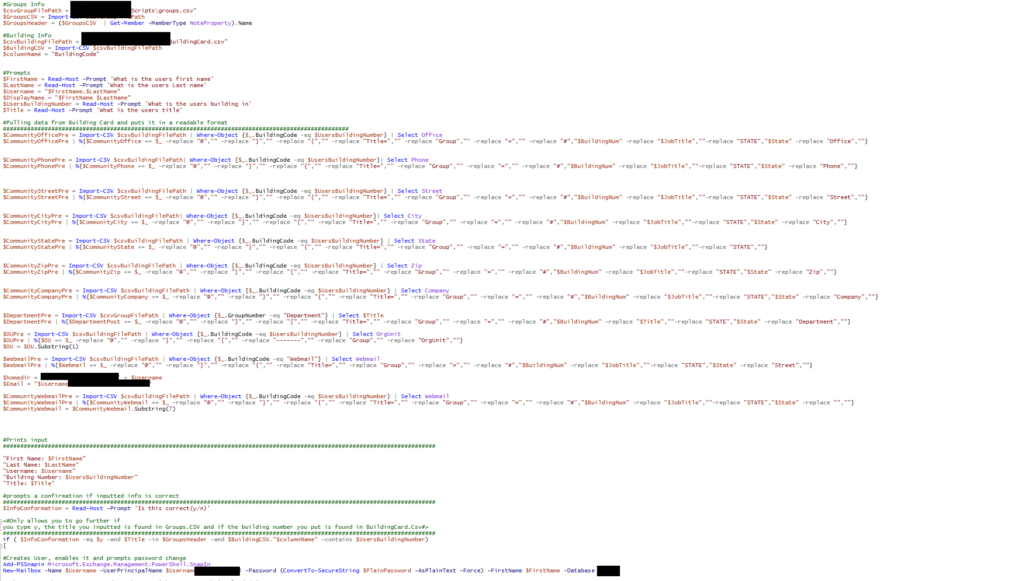
To improve onboarding, offboarding, and daily ticket workflows, I designed and implemented a set of internal automation scripts that standardized new hire provisioning, employee terminations, and recurring ticket generation processes. These scripts were built to align with company security best practices and internal policy requirements, ensuring consistency, auditability, and reduced human error.
For new hires, the automation handled structured account creation tasks, group assignments, permission mapping, and required documentation prompts to ensure compliance. For terminations, the scripts enforced a security-first workflow — disabling accounts, removing access from security groups, triggering checklist verification, and reducing the risk of missed revocations. This significantly lowered the likelihood of orphaned accounts or delayed access removal.
A key design decision was building the scripts to reference a dynamic CSV configuration file rather than hard-coded values. This allowed service desk agents and team leads to update locations, departments, security groups, and ticket routing logic without modifying the core script. As new facilities or business units were added, agents could simply edit the CSV file, making the system scalable and adaptable without introducing risk to production code.
Additionally, I implemented automated ticket generation templates that standardized intake data, reduced back-and-forth clarification, and ensured required compliance fields were captured from the start. This improved response time and reduced repetitive administrative work across the team.
Collectively, these automation efforts saved significant manual processing time, reduced inconsistencies between agents, strengthened security posture during onboarding/offboarding, and improved overall operational efficiency. The project demonstrated systems thinking, process documentation discipline, and a focus on secure, scalable automation rather than one-off scripting solutions.